#TWIGE - 01 - Titleist’s larger mini driver raises a top-of-bag question
The Titleist GTS300 added size and stability to the mini-driver idea, but its value still begins with a specific job at the top of the bag.
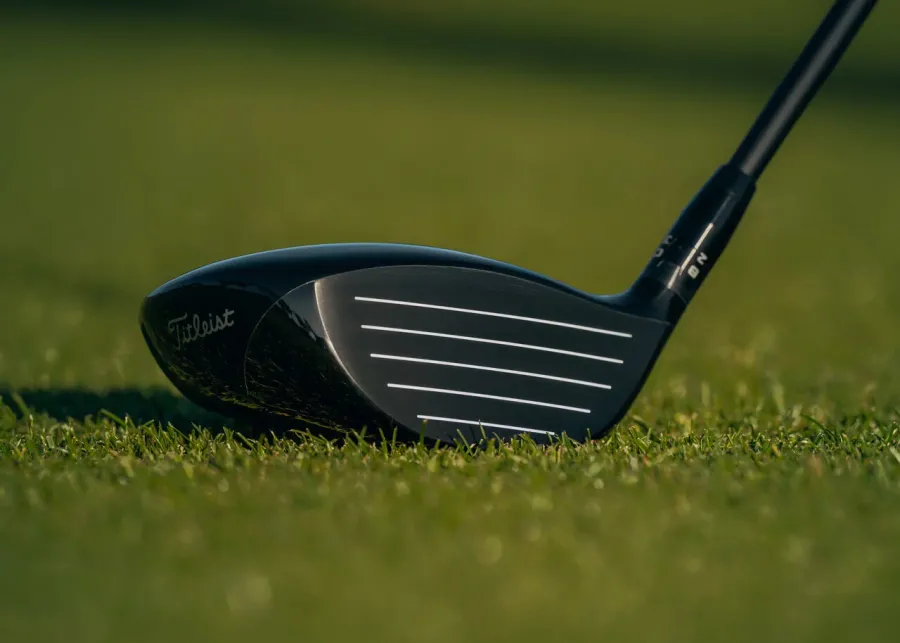
Photo: Titleist.
Titleist ended the week by making its mini driver less mini. On 14 July it announced the GTS300, a 305cc, 13-degree club intended to sit between a conventional driver and a fairway wood. It was 25cc larger than the GT280 it replaced, yet Titleist kept the earlier model’s face height. The design question was clear: could more size make the club steadier from a tee without taking away the option of hitting it from the turf?
That is an interesting engineering compromise. It is also a useful warning against buying a category name. A mini driver only earns its place when it solves a known problem and creates sensible distance gaps around the clubs already in the bag.
What changed
The Titleist announcement published on 14 July described a larger footprint and deeper centre of gravity. The company said those changes produced about 15–20% more inertia than the GT280, with the aim of retaining more stability on off-centre strikes. That percentage is a manufacturer claim about the head’s resistance to twisting; it is not evidence that a golfer will hit 15–20% more fairways.
Titleist also carried over a shallow face profile and used a forged L-Cup face that wraps around the lower edge. The stated purpose was to preserve speed and launch on the low-face strikes that are common when a wood is hit from the ground. Two sole weights, 11g and 3g, could be switched front to back: heavy forward for lower launch and spin, or heavy back for more launch, spin and stability. The standard men’s length was 43.5 inches, shorter than a typical driver, with right- and left-handed heads listed.
For UK golfers, contemporary coverage put the suggested retail price at £499 with a featured shaft and £669 with a premium shaft, with worldwide shop availability due from 23 July. Those were launch details, not confirmation that every configuration would be on a particular retailer’s shelf. Golf Monthly reported the UK price and timing on announcement day.
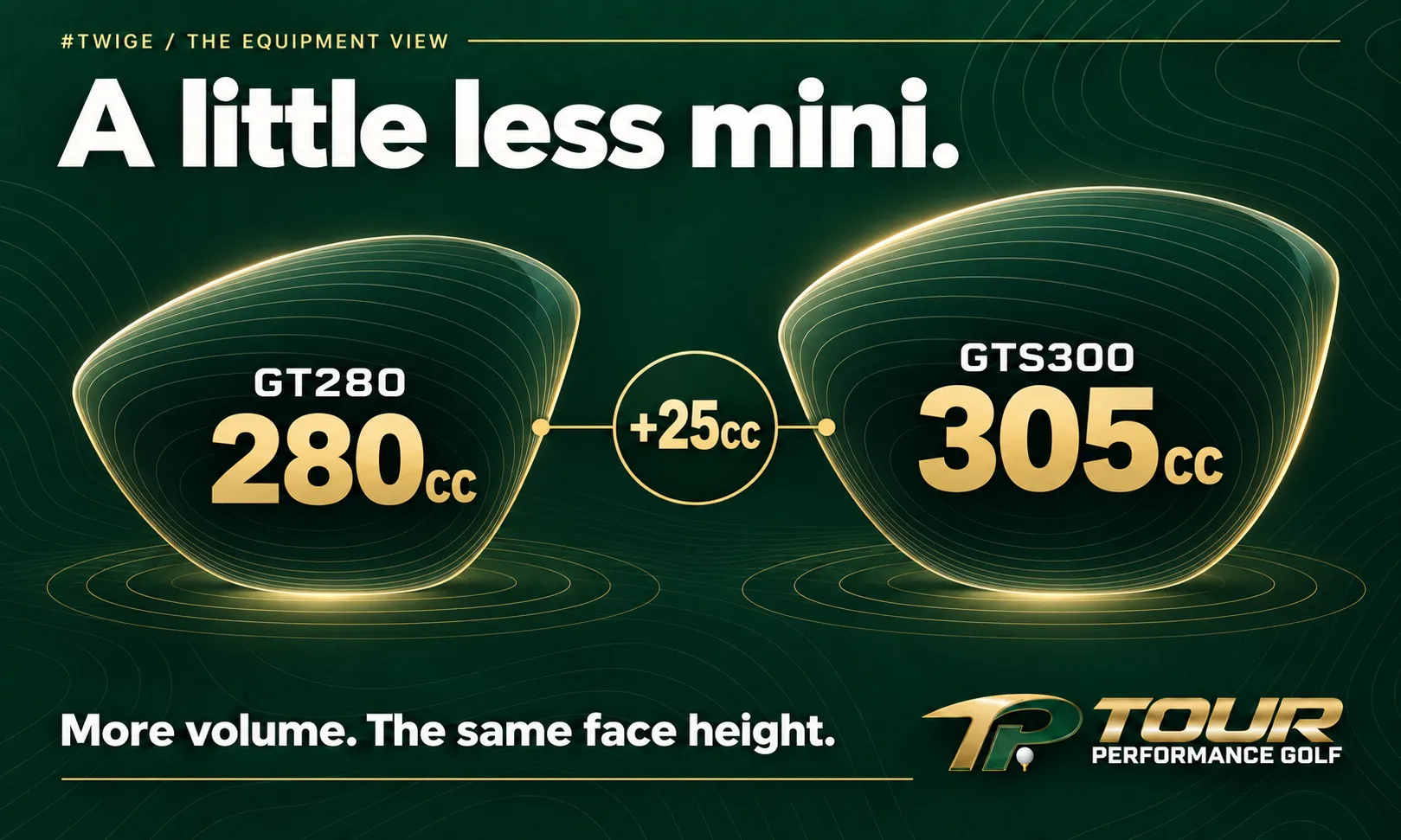
Published head volumes for the outgoing GT280 and new GTS300.
The first useful scrutiny
The most informative same-day account came from GOLF’s Jack Hirsh. He had tested the GTS300 at the Titleist Performance Institute and reported that, for his swing, launch and spin repeated tightly even on a day when he was struggling with his own mini driver. His ball speed was in the low 160mph range, so the result cannot simply be transferred to a different golfer. The venue and access were also supplied by the manufacturer. Even so, this was original testing rather than a rewritten specification sheet, and Hirsh’s conclusion was restrained: the larger head made the club friendlier while preserving the earlier model’s off-the-deck intent. Read the 14 July test and first look.
MyGolfSpy’s Tony Covey supplied the important counterweight. He had not yet spent enough time with the GTS300 to make a performance judgement, but questioned the rapid replacement of the GT280 and noted that the smaller club still did a particular job. His practical point was that a mini might replace a driver, a 3-wood or neither, and each role calls for a different build. His 14 July analysis drew a modest reader discussion about size, role and the outgoing model; it did not establish market demand.
The public conversation was similarly divided by intended use. In a brand-hosted Team Titleist prompt posted on 14 July, replies considered what club to hit from Royal Birkdale’s 18th tee. Some chose the new mini driver; others trusted their normal driver, a 7-wood or the shot they had practised. The thread was promotional and modest in size, but the disagreement was revealing: even in an idealised situation, there was no single automatic club choice. See the dated discussion.
Name the job before choosing the club
A mini driver often arrives with an attractive promise: more control than driver, more speed than 3-wood and enough face height to inspire confidence from a tee. Those comparisons still need testing. A shorter club may help one golfer find the centre more often; another may lose little dispersion while giving away useful carry. A 13-degree head may launch comfortably from a tee yet remain demanding from a tight lie.
Start with the shot the club must provide. If it is a second tee option, compare it with your driver at the same target and record the pattern of ordinary misses, not only the best three swings. If it is intended to replace a 3-wood, test the fairway shot as well. Then check the carry gap to the next club down. A club that is excellent in isolation can still leave the set awkward.
The adjustable weights and hosel make the GTS300 a fitting proposition rather than a fixed answer. Loft, shaft, length and head weight affect how the club is delivered. The setting that produces the longest shot may not produce the flight or strike pattern needed for its actual job.
Titleist’s larger mini driver deserved attention because it responded to a real design tension. It did not remove the decision. The useful question at the end of 14 July was not whether the GTS300 looked easier to hit than its predecessor. It was whether the golfer could identify the shot—and the club—it was meant to replace.
TWIGE — This Week in Golf Equipment. #TWIGE