#TWIGE - 13 - Srixon’s RKT drivers make consistency the interesting number
Srixon’s new ZXi RKT drivers arrive with a speed story, but the independent evidence makes a stronger case for fitting three genuinely different heads.
This Week in Golf Equipment · Edition 13 · Reporting through 1 October 2026
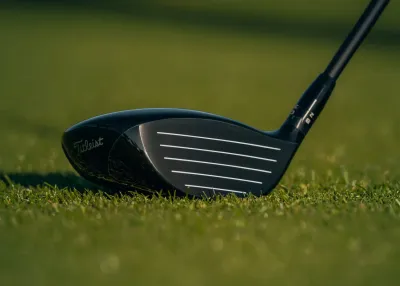
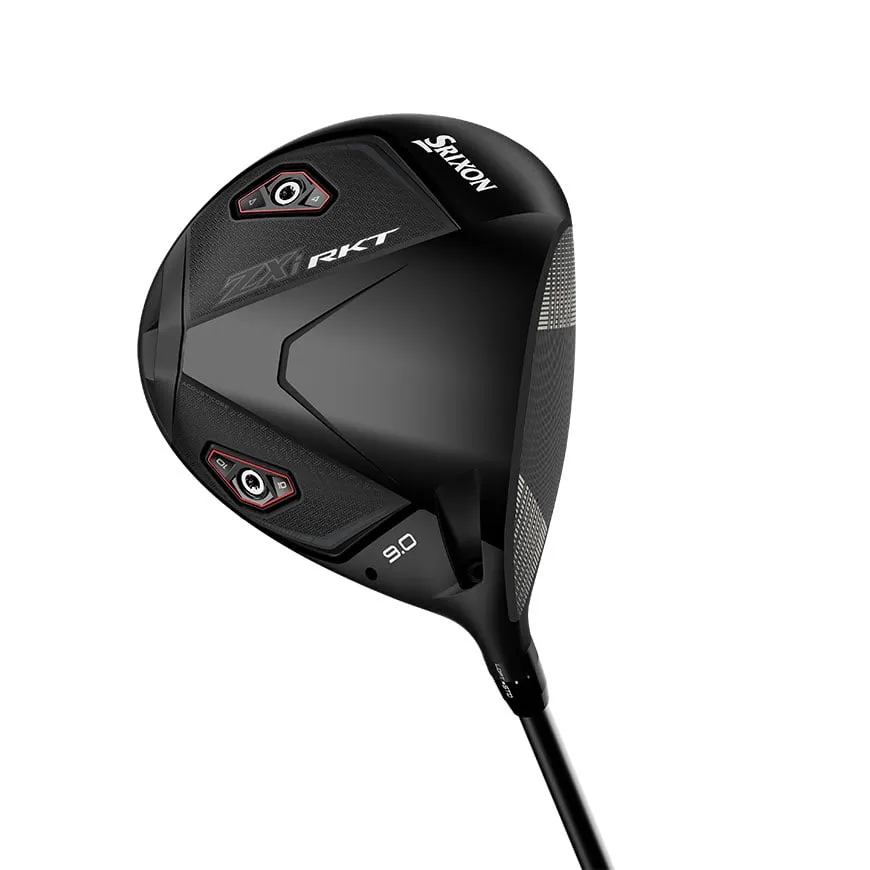
Product photograph: Srixon.
A driver earns its place through the flight and strike pattern it gives the golfer.
Srixon’s new ZXi RKT drivers went on sale in the UK on 2 October, with a £569 recommended retail price, after their formal announcement on 22 September. The launch language is familiar: a new titanium alloy, more face flex, more speed and better results away from the centre.
The independent evidence makes a more useful case. Centre-strike ball speed did not suddenly leap forward in every comparison. What changed was how three different heads launched, spun and responded when impact moved.
That is a fitting story rather than a distance contest.
Three heads with three different jobs
The range contains ZXi RKT LS, ZXi RKT and ZXi RKT MAX drivers. All are 460cc, but they are not simply three cosmetic versions of one head.
Srixon positions the LS as the low-spin option, with front-to-back weights to change spin and launch. The standard RKT uses heel-and-toe weights to influence flight. The MAX puts its weight low and back for the highest launch and stability in the family. The manufacturer attributes the face performance to its silicon-enhanced VR-Titanium alloy, i-FLEX thickness pattern and dual-zone Rebound Frame. Those are Srixon’s specifications and performance claims.
The clearer evidence comes from looking at what each head did under the same independent test.
Cool Clubs tested the three drivers with a robot at several impact locations, then compared them with the previous ZXi generation. At 95mph, the standard RKT produced almost the same centre-strike ball speed as its predecessor. Carry increased by one yard, total distance by 6.2 yards and the measured centre-strike dispersion area reduced from 104.0 to 82.7 square yards.
That does not prove every golfer will gain six yards or hit a tighter pattern. It does show why a single speed number misses the point: similar speed can produce a different outcome when launch, spin and direction change.
MAX is not automatically the safest answer
The same robot test measured the MAX head with the highest moment of inertia, or resistance to twisting, of the three. It launched 2.2 degrees higher than the previous ZXi MAX and carried 7.7 yards farther despite producing 0.3mph less ball speed on the centre strike.
Yet its centre-strike dispersion area was larger in that test: 119.7 square yards against 63.0 for the previous MAX. One robot sample cannot decide the head’s performance for every player, but the result is a useful warning. A larger stability number does not automatically make one model the straightest choice for a particular delivery.
The LS created the lowest spin and shallowest centre of gravity in the new family. It also carried 10.3 yards farther than the previous LS on the robot’s 95mph centre strike. That is a substantial result within this test, but a low-spin head remains a specialist tool. A golfer already struggling to create enough launch and spin may make the ball harder to keep in the air.
The sensible order is to identify the flight problem, then choose the head that gives the fitter a useful way to change it. Starting with MAX because it sounds forgiving, or LS because it sounds fast, puts the badge before the evidence.
Human testing tells a similar story
Golf Monthly’s Joe Ferguson tested the standard RKT across several Foresight GC3 sessions. He found peak ball speed comparable with the outgoing model, while spin and dispersion were more consistent on off-centre strikes. He also found the heel-to-toe weighting made a noticeable difference to flight — something he says many adjustable systems fail to do. His review confirms the £569 UK price and 2 October sale date.
There was a trade-off. Ferguson described the sound as improved but still short of his preferred drivers. Andy Hayes, writing for Plugged In Golf, produced ball speeds above 160mph and unusually straight flights with the standard head, but also found the impact feel less appealing than the performance. His single-player test was highly positive without being a universal verdict.
That distinction matters. Sound and feel can influence confidence, but neither can be read from the specification sheet. The driver that gives the best numbers still has to be one the golfer wants to put behind the ball.
Reader discussion under Hayes’s review was modest — 13 comments at the time of research — and included a golfer who had just bought a discounted Cleveland driver but felt Srixon deserved more consideration after seeing the reported dispersion. That is an authentic reaction, not evidence of a market-wide shift.
What to compare before changing driver
Take your current driver into any trial and keep the conditions as consistent as possible. A useful comparison needs more than the best shot from each head.
Look first at the pattern: where impact sits on the face, how spin changes between centre and common misses, and whether the start direction moves when strike moves. Then examine carry and total distance. A driver that wins once but produces a wider ordinary pattern may be the less useful club.
The three RKT heads appear to create meaningfully different launch windows. That is good news for fitting, because it gives a fitter choices with a purpose. It is not a reason to assume one of them must be better than the driver already in your bag.
Srixon has launched the range with a speed headline. The more convincing reason to test it is consistency — and whether the right RKT head makes your usual miss easier to manage.
TWIGE — This Week in Golf Equipment. #TWIGE